Explainer
The Right Sharpening Angle for Kitchen Knives
Published
Short answer
Most Western kitchen knives are sharpened at 14 to 20 degrees per side, which is 28 to 40 inclusive. Use the maker's figure when it is published: Wusthof states 14 per side and Zwilling about 15, while Wusthof puts most other makers at about 20. With no figure, match the bevel the knife already has. 15 is the keener edge, 20 the tougher one.
You have a chef's knife, and one page says 15 degrees while the next says 20. Both are right, for different knives. Three things decide which applies to yours: what the maker ground at the factory, what the knife cuts, and how much metal you are willing to remove to change it. Every figure here is per side, the angle between the blade and the stone, unless it is marked inclusive. Japanese knives have their own page, linked in the table below.
Sharpening knives at 15 or 20 degrees: the trade-off
The rule is simple: the lower the angle, the more easily the edge cuts and the sooner it gives way. The higher the angle, the tougher the edge and the more force each cut takes. Sharpening Supplies calls 20 degrees the usual compromise for most knives, and 15 to 17 the lowest angle generally recommended for a knife that was designed for 20.
| Point | 15 degrees per side | 20 degrees per side |
|---|---|---|
| Inclusive angle | 30 degrees | 40 degrees |
| Cutting | Keener: less force, cleaner slices | Needs more force, still fully sharp |
| Durability | Lower: the thin edge gives way sooner on hard food | Higher: takes rough board work better |
| Typical of | Makers that grind 14 to 16, such as Wusthof, Zwilling and Shun | Most other makers, by Wusthof's own account |
| Spine height, 45 mm blade | 11.6 mm (0.46 in) | 15.4 mm (0.61 in) |
Kitchen knife sharpening angle by knife type
The type of knife narrows the range before the brand does. Thin slicing knives sit low, knives that meet bone sit high. For Japanese knives see the sharpening angle for Japanese knives, and for pocket and outdoor knives the full knife sharpening angle chart.
| Knife | Per side | Inclusive | Note |
|---|---|---|---|
| Western chef's, utility and paring knives | 14 to 20 | 28 to 40 | Maker's figure first |
| Japanese double-bevel (gyuto, santoku, nakiri) | 10 to 17 | 20 to 34 | Too weak for chopping at the low end |
| Fillet knife | 17 to 18 | 34 to 36 | Kershaw prints 18 for fillet knives |
| Boning knife | 14 to 20 | 28 to 40 | No separate figure is verified: treated as a Western kitchen knife |
| Cleaver | 25 to 30 and over | 50 to 60 and over | Built for bone, not for slicing |
What the makers state for their kitchen knives
These figures were read on each maker's own page. The inclusive column is calculated here. More brands, each with a link to its source, are in the factory angles by brand table.
| Maker | Per side | Inclusive (calculated) | Note |
|---|---|---|---|
| Wusthof | 14, also printed as 14.5 | 28 to 29 | Standard blades. Asian-style santokus and nakiris: 10 per side |
| Zwilling | About 15 | About 30 | Given as the angle between blade and steel |
| Benchmade cutlery | 14 | 28 | The maker says typically 14 per side |
| Shun | 16 | 32 | Its Western Cook's Knife is 22 per side |
| Global | 10 to 15 | 20 to 30 | The blade meets the stone at 10 to 15 degrees |
| Victorinox | Not labelled | Not labelled | Prints 30 to 40 degrees for a steel, without saying per side or total |
| Most other makers | About 20 | About 40 | Wusthof's description of other manufacturers |
What sharpening angle for a chef knife with no figure?
Match what is already there. Ink the bevel with a marker, take one light stroke on the stone, and look at where the ink is gone. Ink left at the edge means your hold is lower than the factory angle, ink left at the top of the bevel means it is higher. Adjust until one stroke clears the whole bevel. The full method is in how to find and hold the sharpening angle.
If the bevel is too worn to read, start at 20 degrees per side. By Wusthof's account it is about where most other makers grind their kitchen knives, and it is the tougher of the two. Move toward 15 only when the knife is used for slicing and you accept sharpening it more often.
When to stay with the factory angle
Staying with the factory angle removes the least metal: the stone only has to renew a bevel that is already the right shape. Lowering the angle is a different job. Taking a knife from 20 to 15 degrees per side means grinding a whole new bevel, which is coarse stone work at 240 to 400 grit before the normal sharpening on about 1000. Raising the angle is quick, because the steeper hold reaches the edge at once.
- Stay with the factory angle when the maker publishes it and the knife cuts well after sharpening. This is the case for most knives.
- Raise the angle toward 20 per side when a thin edge keeps rolling or chipping in ordinary use, or the knife meets bones and hard squash.
- Lower the angle toward 15 per side only on a knife used for slicing, and only if you own a coarse stone and accept a less durable edge.
- Never take a chopping knife below 15: edges of 10 to 15 degrees per side are too weak for chopping.
Holding 15 or 20 degrees on the stone and the rod
On a blade 45 mm wide, the spine sits 11.6 mm above the stone at 15 degrees per side and 15.4 mm at 20. That is under 4 mm of difference, so a hand that drifts can turn one angle into the other within a session. Measure your own blade at the heel and get its height from the knife sharpening angle calculator, in millimeters or inches.
Use the same angle on the honing rod as on the stone. Wusthof gives 14.5 degrees for its steel and Zwilling about 15. A steel does not grind a new bevel, it realigns the one that is there, so it has to meet the edge at the angle the edge was sharpened.
Note.A 20 degree hold on a knife ground at 15 is not a disaster: the knife gets sharp, with a slightly thicker edge. The costly direction is going back down.
Quick answers
Short answers to the kitchen knife angle questions asked most often. All figures are degrees per side unless marked inclusive.
- What sharpening angle is best for kitchen knives? The maker's own figure. Without one, 14 to 20 degrees per side covers Western kitchen knives, and 20 is the usual compromise.
- Sharpening knives 15 or 20 degrees? 15 per side cuts more easily and dulls sooner. 20 is tougher. Pick the one the knife was ground at.
- What sharpening angle for a chef knife? Wusthof states 14 per side, Zwilling about 15, Shun 16. Wusthof puts most other makers at about 20.
- Is a 20 degree angle right for knife sharpening? For most kitchen knives with no published figure, yes. It is 40 degrees inclusive.
- Is 15 degrees per side the same as 30 degrees? Yes. 15 per side is 30 inclusive, both sides added together.
What you need for this
 See price on AmazonAmazon
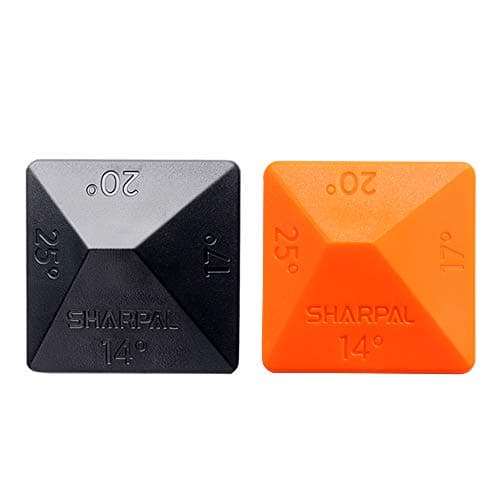
SHARPAL 196N angle pyramid guides, 2-pack
From Best Knife Sharpening Angle Guides: Clips, Wedges and Rails
 See price on AmazonAmazon
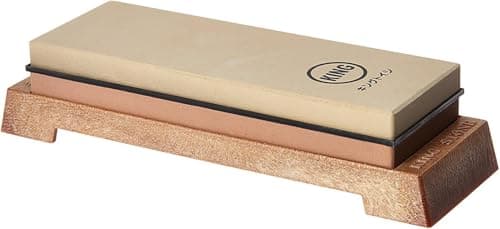
King KW65 1000/6000 combination whetstone
From Best Whetstone for Beginners: One Stone That Covers Most Knives
 See price on AmazonAmazon
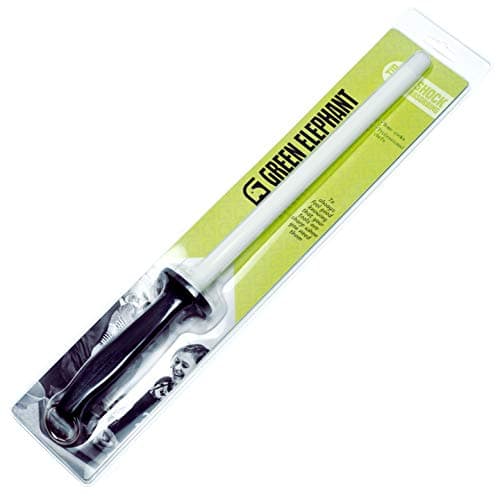
Green Elephant ceramic honing rod, 11 in, 1500 grit
From Best Knife Sharpening Rods: Steel, Ceramic and Diamond Compared