Explainer
Best Sharpening Angle for a Pocket Knife
Published
Short answer
Sharpen a pocket knife at 15 to 22 degrees per side, which is 30 to 44 inclusive. About 20 per side suits general carry, 15 to 17 a knife that only slices, and 22 to 25 one that works hard. Hunting and outdoor fixed blades run 20 to 25 per side, up to 30 for hard use. A maker's published figure beats all of these.
This page is for someone who carries a folder or a hunting knife and wants one number to set on the stone. There is no single number, but there is a short list: the maker's figure if one is published, otherwise a range picked by what the knife cuts. Every figure here is per side, the angle between the blade and the stone, unless it is marked inclusive. Makers of pocket knives often print the inclusive figure, so read the label before halving or doubling anything.
Best sharpening angle for a pocket knife, by use
Pick the row that matches the hardest thing the knife does in a normal week, not the easiest. A lower angle cuts more easily and is less durable, a higher one is tougher and needs more force. For most carry knives 20 degrees per side is the middle of the road.
| Use | Per side | Inclusive | What you trade |
|---|---|---|---|
| Slicing: food, paper, tape, light cord | 15 to 17 | 30 to 34 | Keenest edge, least durable |
| General carry: boxes, packaging, whittling | 18 to 20 | 36 to 40 | The usual compromise |
| Hard use: cardboard all day, rope, carpet | 22 to 25, up to 30 | 44 to 50, up to 60 | Tough edge, noticeably more force per cut |
| Field dressing and hunting | 20 to 25 | 40 to 50 | Holds up against hide, sinew and the odd bone |
What Victorinox, Benchmade, Kershaw and Spyderco state
These figures were read on each maker's own page. Brands that are missing here are not forgotten: a figure is printed only when the maker's page states it. The factory angles by brand table holds the full list with a source link in every row.
| Maker | Per side | Inclusive | Note |
|---|---|---|---|
| Victorinox pocket knives | 15 to 20 | 30 to 40 (calculated) | The angle of the blade to the stone |
| Benchmade | About 15 to 18 | 30 to 35 | The maker prints both forms, for most of its knives |
| Kershaw | 20 to 22 | 40 to 44 (calculated) | 18 to 22 when resharpening, blade held against the sharpener |
| Spyderco | Not published | Not published | Its Sharpmaker is preset to 15 or 20 per side, 30 or 40 inclusive |
Why pocket knives run wider than kitchen knives
A kitchen knife cuts soft food on a board, in a straight line. A pocket knife cuts cardboard, plastic strapping, rope and wood, often with a twist at the end of the cut. Sideways force is what folds or chips a thin edge. That is why Western kitchen knives sit at 14 to 20 degrees per side while pocket knives sit at 15 to 22 and outdoor knives higher still.
Sharpening Supplies puts it plainly: from 22 to 30 degrees per side the edge is considerably more durable, because a pocket or hunting knife will see abuse that a slicing knife never does, and the price is that it does not cut quite as well. The kitchen side of the comparison is in the right sharpening angle for kitchen knives.
Hunting knife sharpening angle
Hunting and outdoor fixed blades are sharpened at 20 to 25 degrees per side, 40 to 50 inclusive. Stay near 20 for a knife that only skins and slices meat. Go to 25 for one that also splits kindling or cuts through joints, and up to 30 for a camp knife that is used hard. A fillet knife is the exception at the low end, at 17 to 18 per side.
Some makers of fixed blades list an edge angle on the product page of each knife. When yours does, use it and check whether it is printed per side or inclusive. The knife sharpening angle chart lists cleavers, machetes and axes as well.
Sharpening angle for a Buck 110, a Bugout or D2 steel
Model questions get the maker's brand-level answer, because makers publish angles for their range, not for each knife. A Benchmade Bugout falls under Benchmade's general figure: 30 to 35 degrees inclusive, about 15 to 18 per side. For a Buck 110, the figure to use is the one on Buck's own sharpening page. No Buck number is printed here because it has not been read on that page directly: check the brand table or Buck's page before setting a guide.
No verified angle exists per steel. D2 and other steels are sharpened at the angle the maker ground on that knife, chosen by use from the table above. If the maker gives nothing, match the factory bevel with the marker test.
Keep the factory bevel, and how to hold it on a small blade
Matching the existing bevel removes the least metal. Ink the bevel with a marker, take one light stroke, and adjust until the stroke clears the ink from the whole bevel. The steps are in how to find and hold the sharpening angle.
Small blades leave little room for error. On a blade 20 mm wide, the spine sits 5.2 mm above the stone at 15 degrees per side and 6.8 mm at 20 degrees: a difference of 1.6 mm. On a 25 mm blade, 20 degrees is 8.6 mm (0.34 in). Get the height for your blade from the knife sharpening angle calculator. An angle guide or a guided system holds a small blade steadier than a bare hand.
Note.A pocket knife blade narrows toward the tip. At the same angle the spine sits lower there, so follow the curve by lifting the handle slightly instead of keeping one fixed height.
Quick answers
Short answers to the pocket and hunting knife angle questions asked most often. All figures are degrees per side unless marked inclusive.
- What sharpening angle for a pocket knife? 15 to 22 degrees per side, 30 to 44 inclusive. About 20 per side suits general carry.
- What is the best sharpening angle for a pocket knife? The maker's own. Victorinox states 15 to 20, Benchmade about 15 to 18 per side, Kershaw 20 to 22.
- What is the hunting knife sharpening angle? 20 to 25 degrees per side, up to 30 for hard use. Fillet knives sit lower, at 17 to 18.
- What is the sharpening angle for a Benchmade Bugout? Benchmade states 30 to 35 degrees inclusive for most of its knives, about 15 to 18 per side.
- What is the best sharpening angle for D2 steel? No per-steel figure is verified. Use the angle the maker ground, or pick by use from the table.
What you need for this
 See price on AmazonAmazon
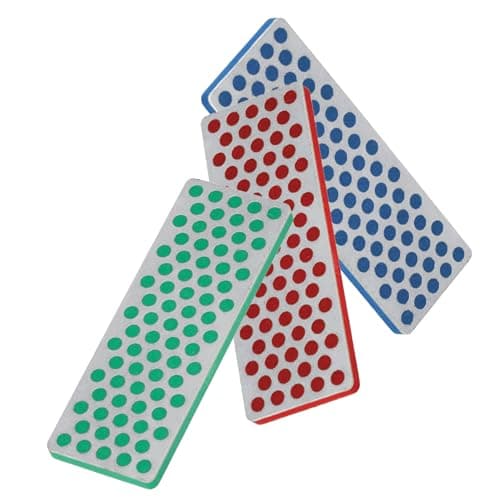
DMT W7EFC mini diamond stones, set of 3, 2.75 x 1 in
From Best Sharpening Stones for Pocket Knives: Bench and Pocket Size
 See price on AmazonAmazon
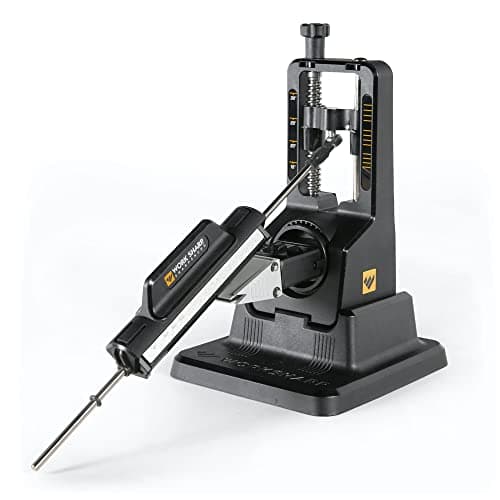
Work Sharp Precision Adjust knife sharpener kit
 See price on AmazonAmazon
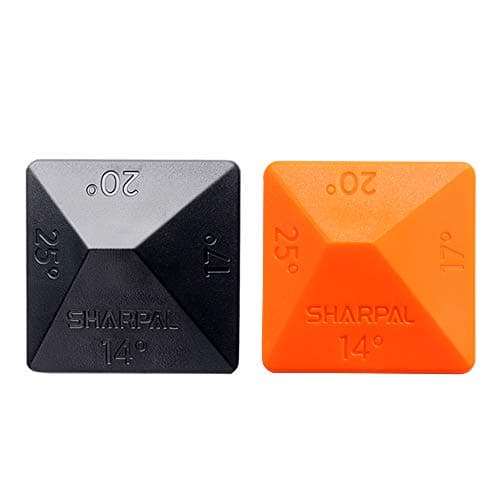
SHARPAL 196N angle pyramid guides, 2-pack
From Best Knife Sharpening Angle Guides: Clips, Wedges and Rails
 See price on AmazonAmazon
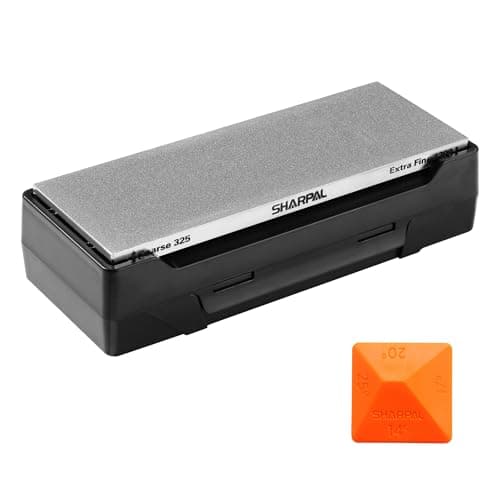
SHARPAL 162N diamond stone 325/1200, 8 x 3 in